
From DNA to Diagnosis: How Genetic Testing Works
For the patient, a genetic test usually feels like a short conversation, a small blood sample, and a report a few days or weeks later.
Read More

Understand a test your doctor has recommended, what happens at each step and where to find support.

Find the right test, check sample requirements, refer a patient and ask the scientific team about a report.

Review SIG's testing capability and discuss institutional requirements and coordination.
Testing is organised around three areas of clinical practice. Each brings together the relevant tests, guidance and counselling support.

Identifying the genetic changes in a tumour that help match patients to targeted therapies and clinical trials.
Solid Tumour Precision Panel (50 genes)

Finding the genetic cause of developmental delay, congenital anomalies and suspected syndromes, and what it means for the family.
CMA, FISH, Karyotyping, Targeted Gene Panels, WES

Screening and diagnostic testing in pregnancy, investigation of pregnancy loss and parental chromosome studies.
CMA, FISH, Karyotyping, NIPT, QF-PCR, WES
Genetic counselling helps individuals and families understand genetic conditions and genetic tests, and make informed decisions. It is provided by trained genetic counsellors working with doctors and laboratory specialists.
Reviewing personal and family medical history, explaining what the test can and cannot detect, discussing possible results and supporting informed consent.
Explaining the result in clear language, what it means for health, treatment or the pregnancy, the chance of recurrence, and which relatives may benefit from testing.

All testing is performed in-house in a dedicated genomics laboratory that brings together molecular genetics, cytogenetics and next-generation sequencing. Each technology is chosen for the clinical question it answers best, and many cases use more than one.
Every result follows a controlled process from sample receipt to signed report. Quality checks at each stage ensure that results are accurate, traceable and clinically meaningful.
Each sample is checked against its requisition form using at least two patient identifiers.
Positive, negative and no-template controls are included in every run.
Germline, copy number and somatic variants are each interpreted against the relevant ACMG/AMP, ACMG and ClinGen, or AMP/ASCO/CAP guidelines.
Each report is prepared by a qualified scientist, reviewed independently and signed out by an authorised specialist.
Select a test with the help of the scientific team, send the sample with the requisition, clinical information and consent, and discuss the report when it is released. Patients can also be referred for genetic counselling.
Discuss institutional requirements with SIG, from test selection and sample logistics to reporting.
Plain-language articles for patients and families, and guides for healthcare professionals.
 Article
For the patient, a genetic test usually feels like a short conversation, a small blood sample, and a report a few days or weeks later.
Read More Article
Screening tests such as the double marker, NIPT and ultrasound tell parents whether their baby might be at higher risk of a genetic condition.
Read More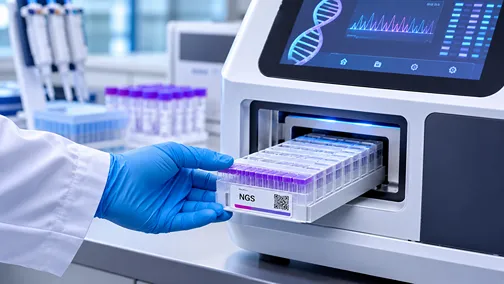 Article
Many cancer patients today hear their oncologist recommend an “NGS test”.
Read MoreGene fusions are among the most important targets in precision oncology. They occur when part of one gene joins part of another, producing an abnormal protein that drives cancer growth.
Read MoreFor decades, the karyotype was the standard first test for children with developmental delay, intellectual disability or birth defects.
< Read MoreFor patients and families with questions about a test, sample collection or reports.
Ask for an appointment for yourself or a family member. The team will confirm availability.
Test selection, sample requirements, report discussion and partnership enquiries.