

Cancer Genomics
Identifying the genetic changes in a tumour that help match patients to targeted therapies and clinical trials.
All testing is performed in-house in a dedicated genomics laboratory that brings together molecular genetics, cytogenetics and next-generation sequencing. Each technology is chosen for the clinical question it answers best, and many cases use more than one method. This page sets out how to select a test, what each sample needs and how to reach the scientific team.

From test selection to the signed report.
Use the test selection guide below or Find a Test. The scientific team can advise on the most suitable test.
Include the completed requisition form, clinical information and signed consent. For prenatal samples, include gestational age, ultrasound findings and a maternal EDTA blood sample.
Label every sample with at least two patient identifiers, matching the requisition form. Transport all samples at room temperature unless stated otherwise. Do not freeze.
Sample type, volume, container, transport time and temperature are checked against acceptance criteria. Samples that do not meet the criteria are referred back to the clinician promptly.
Each report is prepared by a qualified scientist, reviewed independently and signed out by an authorised specialist. Reports state the test performed, the regions analysed, the result and its interpretation, recommendations for follow-up and the limitations of the test.
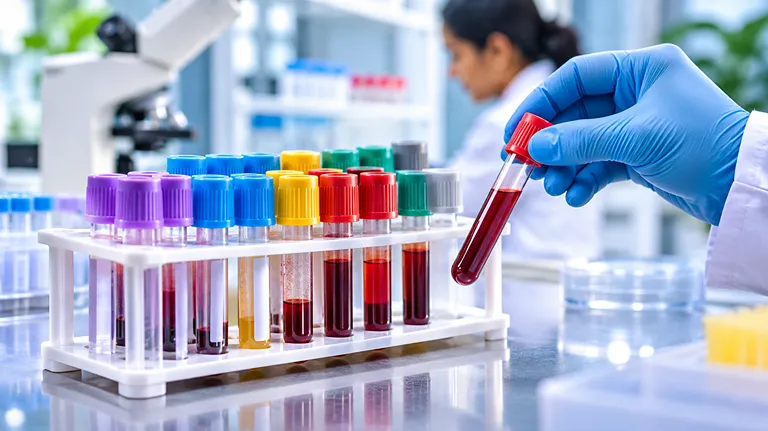
General requirements:
| Test | Sample and Transport |
|---|---|
| NIPT | 10 mL maternal blood in a cell-free DNA collection tube, from 10 weeks of gestation. Do not refrigerate. |
| QF-PCR | Amniotic fluid 5 to 10 mL, chorionic villi 10 to 20 mg, blood 1 to 2 mL in EDTA, or fresh products of conception. Reach the laboratory within 24 hours. |
| FISH | Amniotic fluid 5 to 10 mL, chorionic villi 10 to 20 mg, or peripheral blood 2 to 3 mL in sodium heparin. Reach the laboratory within 24 hours. |
| Karyotyping | Peripheral blood 2 to 3 mL in sodium heparin (1 mL for infants), amniotic fluid 15 to 20 mL, chorionic villi 15 to 20 mg, or fresh products of conception in sterile transport medium. Living cells are required. Do not use EDTA tubes or formalin. Reach the laboratory within 24 hours. |
| Chromosomal Microarray | Peripheral blood 2 to 3 mL in EDTA, amniotic fluid 10 to 15 mL, chorionic villi 10 to 20 mg, fresh products of conception, or at least 500 ng extracted DNA. Prenatal samples need a maternal EDTA blood sample. |
| Targeted Gene Panels and Whole Exome Sequencing | Peripheral blood 3 to 5 mL in EDTA, or at least 1 µg extracted DNA. For trio exome sequencing, send samples from both biological parents. Include detailed clinical features and family history. |
| Solid Tumour Precision Panel (50 genes) | FFPE tumour block, or 8 to 10 unstained sections of 5 to 10 µm with one H&E slide, with at least 20% tumour content. Include the histopathology report. |
FFPE blocks and slides are transported at room temperature (15 to 25°C), protected from heat and direct sunlight. No cold chain is required.
A pathologist reviews the H&E slide, confirms tumour content and marks the tumour area for macrodissection where required. If a sample is unsuitable, the referring clinician is informed within 1 working day so that an alternative block can be sent.
3 working days from receipt of a suitable sample at the laboratory.
A negative result means no reportable alteration was detected in the regions analysed. It does not exclude alterations below the limit of detection, outside the panel, or in samples with low tumour content. Where clinical suspicion remains high, repeat testing on another block or alternative testing may be considered.
Each report is prepared by a qualified scientist, reviewed independently and signed out by an authorised specialist. Reports state the test performed, the regions analysed, the result and its interpretation, recommendations for follow-up and the limitations of the test.

ACMG/AMP guidelines for the interpretation of sequence variants.
ACMG and ClinGen technical standards for the interpretation of constitutional CNVs.
AMP/ASCO/CAP guidelines for the interpretation of somatic variants.
Human Genome Variation Society (HGVS).
International System for Human Cytogenomic Nomenclature (ISCN).
Refer patients and families for genetic counselling before testing or after results. Send a short professional enquiry with your details; the counselling coordinator will follow up. Patient identifiers and clinical history are not needed at this stage.
Hospitals and diagnostic partners can discuss institutional requirements with SIG, from test selection and sample coordination to reporting.
Identifying the genetic changes in a tumour that help match patients to targeted therapies and clinical trials.

Finding the genetic cause of developmental delay, congenital anomalies and suspected syndromes, and what it means for the family.

Screening and diagnostic testing in pregnancy, investigation of pregnancy loss and parental chromosome studies.