

Cancer Genomics
Identifying the genetic changes in a tumour that help match patients to targeted therapies and clinical trials.
Suraksha Institute of Genomics, is a state-of -the-art molecular genomic laboratory. SIG is pledged to provide, precision genomic diagnosis: Your Roadmap to Personalized Healthcare. With a comprehensive catalogue of more than 200 genetic tests, we deliver critical diagnostic data across rare and inherited disorders, oncology risk, prenatal diagnosis and proactive health screenings.
Driven by a premier team of 100+ internal scientists, our unwavering commitment to scientific excellence has forged a deeply trusted relationship with our national prescriber network. SIG in- house developed data analysis pipelines and variant annotations tool made SIG unique in genomic sequencing.
Suraksha with it's 32 years of diagnostic excellence provide it's services with 100+ centres throughout east and north-eastern part of India. We are transforming patient care by driving early intervention and precision medicine through our own cutting-edge genomic technologies.
All testing is performed in-house in a dedicated genomics laboratory that brings together molecular genetics, cytogenetics and next-generation sequencing. Each technology is chosen for the clinical question it answers best, and many cases use more than one method.
Identifying the genetic changes in a tumour that help match patients to targeted therapies and clinical trials.

Finding the genetic cause of developmental delay, congenital anomalies and suspected syndromes, and what it means for the family.

Screening and diagnostic testing in pregnancy, investigation of pregnancy loss and parental chromosome studies.
All testing is performed in-house in a dedicated genomics laboratory that brings together molecular genetics, cytogenetics and next-generation sequencing. Each technology is chosen for the clinical question it answers best, and many cases use more than one method.
Next-generation sequencing (NGS) reads millions of DNA or RNA fragments in parallel. It is used for tumour profiling, non-invasive prenatal testing, targeted gene panels and whole exome sequencing.
High-density SNP microarrays detect copy number variants and regions of absence of heterozygosity across the whole genome, at a resolution far higher than conventional karyotyping.
QF-PCR amplifies polymorphic short tandem repeat markers with fluorescent primers, followed by capillary electrophoresis. It provides rapid detection of aneuploidies of chromosomes 13, 18, 21, X and Y.
Real-time PCR detects and quantifies specific genetic targets with high sensitivity and is used for targeted molecular assays.
FISH uses fluorescent DNA probes to visualise specific chromosomal regions in interphase nuclei and metaphase chromosomes. It is used for rapid aneuploidy detection, microdeletion syndromes and characterisation of chromosomal rearrangements.
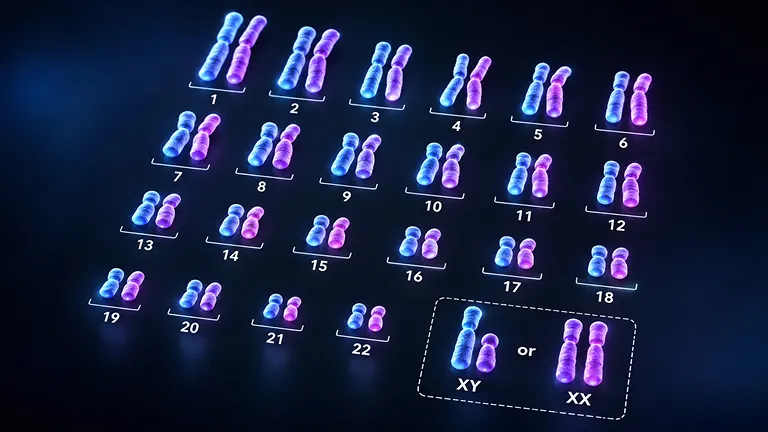
Cell culture and G-banded karyotyping provide a complete view of the chromosome set and remain the standard method for detecting balanced translocations, inversions and other structural rearrangements.
Validated bioinformatics pipelines align sequence data to the human reference genome, call and annotate variants, and filter them against population databases, disease databases and the published literature. Every pipeline is version-controlled and revalidated after any change.
Tumour profiling is performed on the Genexus System, an automated next-generation sequencing platform. It integrates nucleic acid purification, library preparation, templating, sequencing and data analysis in one connected workflow.
DNA and RNA are purified and quantified from the tumour sample on an automated purification instrument.
The integrated sequencer prepares targeted amplicon libraries and sequences them with minimal manual handling.
Dedicated bioinformatics software identifies single nucleotide variants, insertions and deletions, copy number variations and gene fusions.
Molecular pathologists and scientists review and interpret every result before the report is released.
Every result follows a controlled process from sample receipt to signed report. Quality checks at each stage ensure that results are accurate, traceable and clinically meaningful.
The laboratory is accredited by the College of American Pathologists (CAP) and the National Accreditation Board for Testing and Calibration Laboratories (NABL) under ISO 15189. It participates in external quality assessment and proficiency testing programmes for its genomic tests.
Each report is prepared by a qualified scientist, reviewed independently and signed out by an authorised specialist. Reports state the test performed, the regions analysed, the result and its interpretation, recommendations for follow-up and the limitations of the test.
Genetic information is handled confidentially. Results are released only to the referring clinician or as authorised by the patient, and data are stored securely with access restricted to authorised staff.
Find a test, learn about genetic counselling or discuss institutional requirements.