
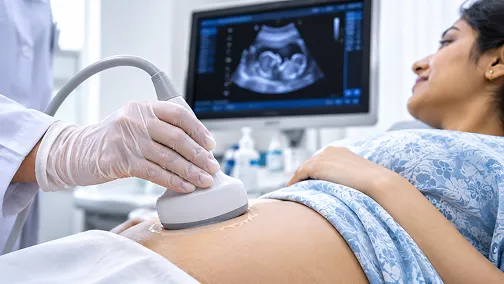
Screening tests such as the double marker, NIPT and ultrasound tell parents whether their baby might be at higher risk of a genetic condition. When a definite answer is needed, the next step is prenatal diagnosis: testing cells that come from the baby or the placenta. It is a big step for any family, and understanding what is involved makes it a little less daunting.
When prenatal diagnosis is offered
Prenatal diagnosis is usually offered when a screening test shows a high risk, when an ultrasound finds a structural problem in the baby, when both parents are carriers of a condition such as thalassaemia, when a parent carries a balanced chromosome rearrangement, or when a previous child had a genetic condition. Some parents also choose it simply for reassurance.
How the sample is taken
There are two main procedures. Chorionic villus sampling (CVS) takes a tiny piece of the placenta, usually between 11 and 14 weeks. It gives an earlier answer, which is especially helpful for families at known risk of conditions like thalassaemia. Amniocentesis takes a small amount of the fluid around the baby, usually from 15 weeks onwards. The fluid contains cells shed by the baby.
Both are done with a thin needle under continuous ultrasound guidance by an experienced specialist. Many women worry about miscarriage. Modern studies suggest that the additional risk caused by the procedure is low, about 0.2 to 0.3%, or roughly 1 in 300 to 500 procedures when performed by experienced hands.
What the laboratory looks for
The test chosen depends on the reason for testing. A rapid test such as QF-PCR or FISH checks for the most common chromosome conditions, Down syndrome, trisomy 18, trisomy 13 and sex chromosome changes, and can give a result within a few days.
Chromosomal microarray looks across all chromosomes for missing or extra pieces too small to be seen with traditional karyotyping. In babies with structural abnormalities on ultrasound and normal karyotype, microarray finds an additional clinically important change in about 6% of cases. For this reason, it is now the recommended first test when an ultrasound abnormality is found. Karyotyping remains useful when a balanced rearrangement is suspected or when the parents carry one.
When both parents are known carriers of a single-gene condition, the laboratory tests the sample for those specific family variants. In some babies with abnormalities on scan and normal microarray results, prenatal exome sequencing can find a genetic cause in roughly a further 8 to 10% of cases. Laboratories also check that the sample is not contaminated with the mother’s cells, which could give a misleading result.
After the result
Most prenatal tests bring reassuring news. When a condition is found, families need time, accurate information and compassionate support. Genetic counselling helps them understand the condition, what life may look like for the child, available treatments, and the choices open to them, including those permitted under India’s Medical Termination of Pregnancy Act. Prenatal testing in India is carried out under the PCPNDT Act, which strictly prohibits revealing the sex of the baby.
When to consider prenatal diagnosis
Prenatal diagnosis should be discussed whenever screening shows a high risk, ultrasound reveals a structural problem, both parents are carriers of the same condition, a parent carries a chromosome rearrangement, or there is a previous child with a genetic or chromosome condition. Early planning, ideally before pregnancy for known at-risk couples, allows the earliest possible testing.