FISH uses fluorescently labelled DNA probes that bind to specific chromosomal regions. When viewed under a fluorescence microscope, the number and position of the signals show whether a chromosome or a specific region is present in the normal number of copies.
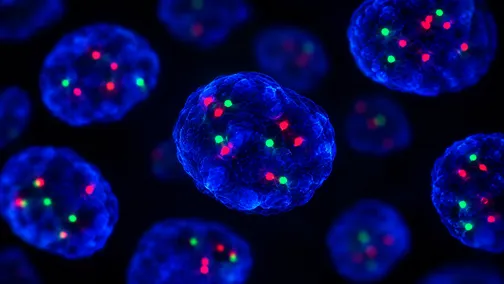
Diagnostic test in pregnancy. On fetal cells obtained by chorionic villus sampling or amniocentesis, this is a diagnostic test rather than a screening test.
Interphase FISH on uncultured amniotic fluid or chorionic villi detects aneuploidies of chromosomes 13, 18, 21, X and Y within 24 to 48 hours.
Targeted FISH confirms specific syndromes, including 22q11.2 deletion (DiGeorge) syndrome, Williams syndrome (7q11.23), Prader-Willi and Angelman syndromes (15q11-q13), Smith-Magenis syndrome (17p11.2) and Wolf-Hirschhorn syndrome (4p16.3).
FISH is used to identify marker chromosomes, confirm the origin of rearranged chromosomal material, test parents for balanced rearrangements detected by microarray, and determine the level of mosaicism.
SRY and X/Y probes are used in the evaluation of differences of sex development.
FISH uses fluorescently labelled DNA probes that bind to specific chromosomal regions. When viewed under a fluorescence microscope, the number and position of the signals show whether a chromosome or a specific region is present in the normal number of copies.
Each report is prepared by a qualified scientist, reviewed independently and signed out by an authorised specialist. Reports state the test performed, the regions analysed, the result and its interpretation, recommendations for follow-up and the limitations of the test.
Report: A signed report is sent to the referring doctor.
A genetic counsellor can explain what this test can and cannot show before it is done, and what the result means once it is available.
Prices depend on the test and clinical situation. Ask our team for current price information.
Request Price Information